From International Agendas to Local Transformation
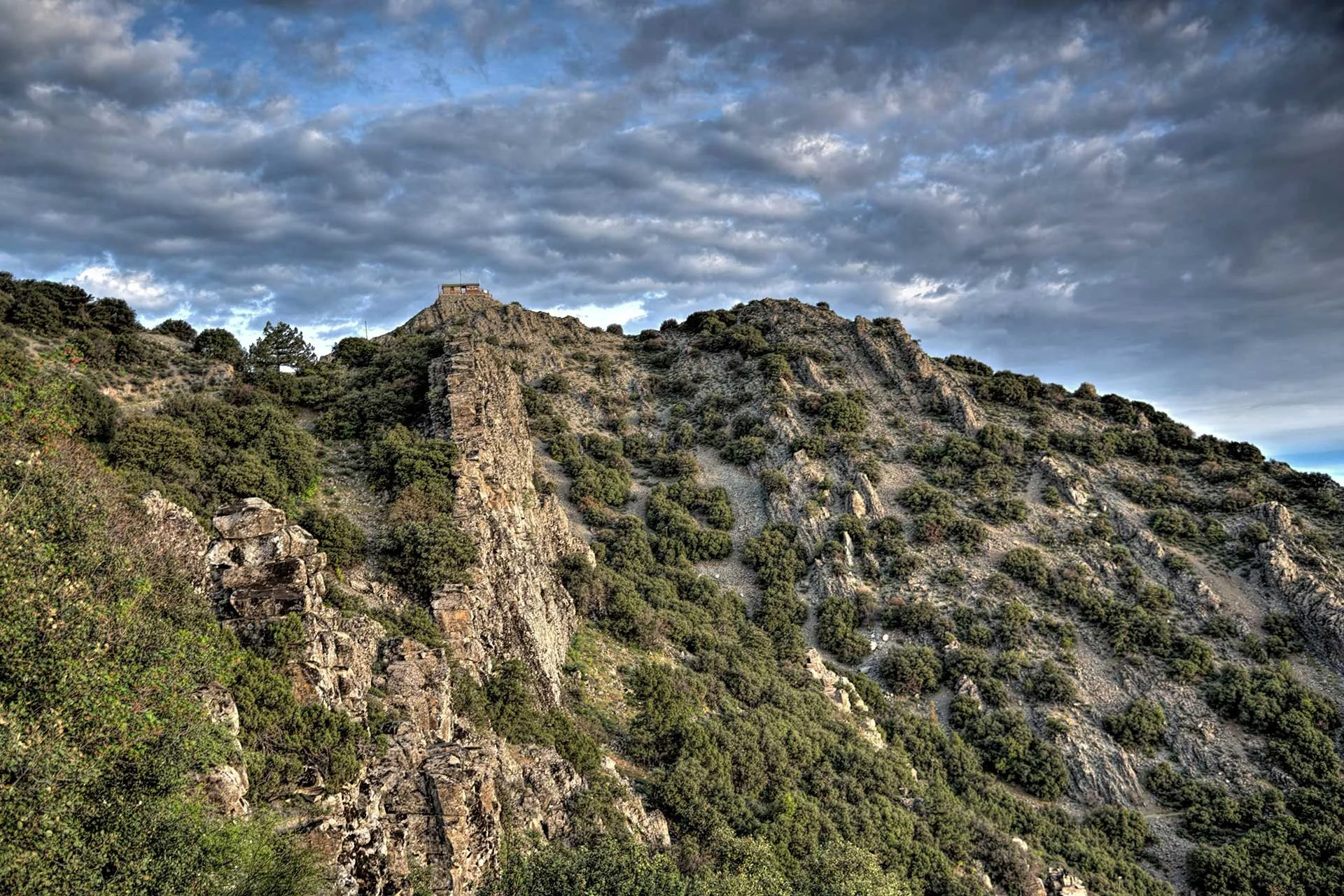
● From Global and European Frameworks to the Cyprus Mountain Policy FrameworkMountains have gradually moved from the margins of public policy to a recognised field of global, European and national action. This recognition reflects a central political concern: territories facing permanent natural, demographic and socio-economic constraints require adapted, place-based and long-term approaches if cohesion is to have real meaning.
Mountain Global Agenda
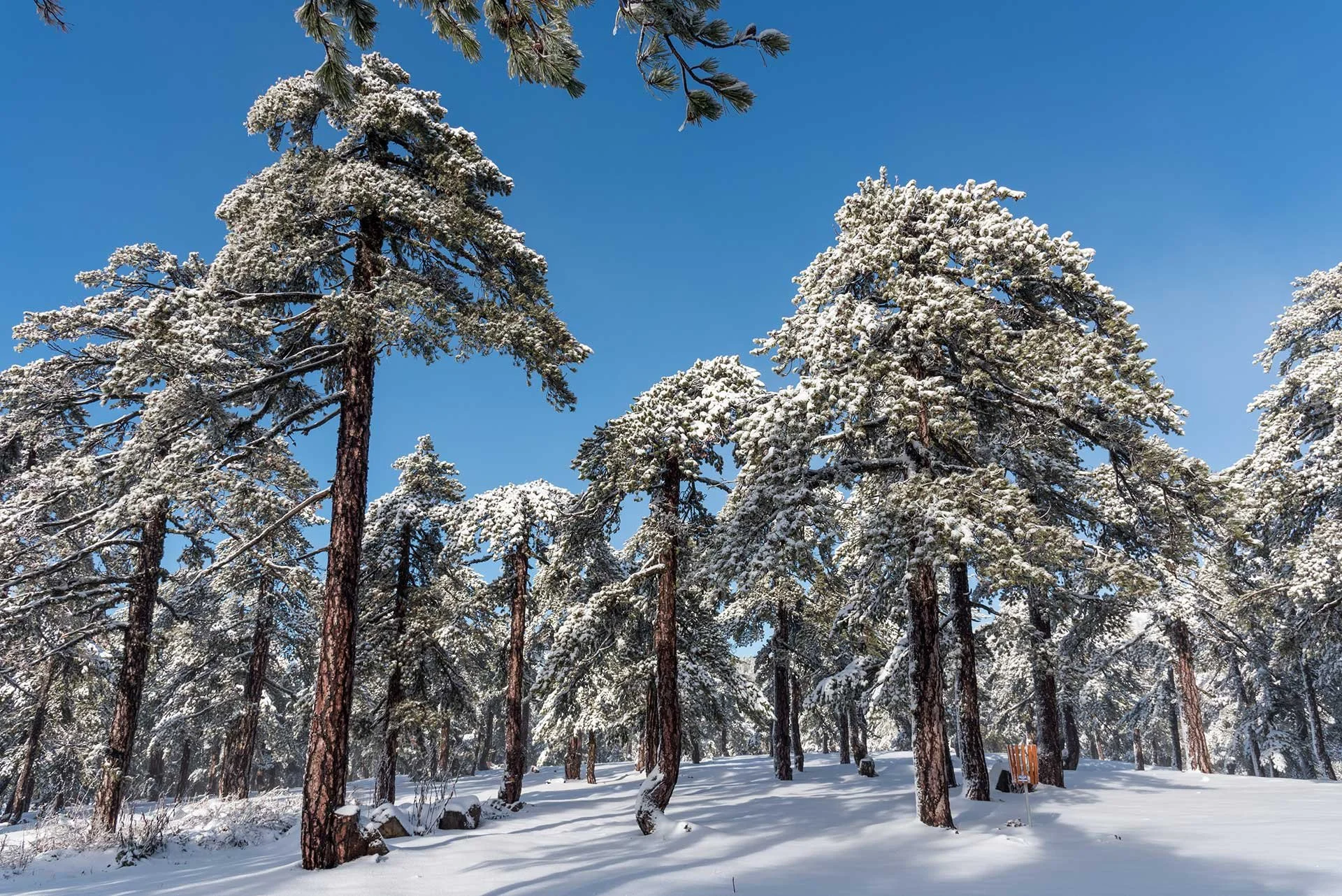
At global level, mountains entered the sustainable development agenda through Agenda 21, Chapter 13, adopted at the 1992 United Nations Conference on Environment and Development. Chapter 13 deals specifically with sustainable mountain development and marked the beginning of a global mountain agenda that recognises mountains as critical ecosystems requiring conservation, restoration and sustainable use at global, regional and local levels.
A further milestone came in 1998, when the UN General Assembly proclaimed 2002 as the International Year of Mountains. During that year, activities worldwide recognised the diverse values of mountains and the importance of sustainable mountain development. Many governments established national programmes, committees or long-term strategies for their mountain regions.
Regional mountain cooperation also developed through instruments such as the Alpine Convention, the Carpathian Convention and the Pyrenees Working Community, which promote sustainable development and cooperation around shared mountain challenges.
FAO has played a leading role in sustainable mountain development within the UN system: it was appointed task manager for Chapter 13 of Agenda 21 in 1992, acted as lead agency for the International Year of Mountains in 2002 and 2022, and has been mandated by the UN General Assembly since 2003 to lead the annual observance of International Mountain Day on 11 December. FAO hosts the Secretariat of the Mountain Partnership, the United Nations voluntary alliance dedicated to improving the lives of mountain peoples and protecting mountain environments.
The mountain agenda is embedded in the 2030 Agenda for Sustainable Development. SDG target 6.6 calls for the protection and restoration of water-related ecosystems, including mountains, forests, wetlands, rivers, aquifers and lakes. SDG target 15.1 refers to the conservation, restoration and sustainable use of terrestrial and inland freshwater ecosystems and their services, including forests, wetlands, mountains and drylands. SDG target 15.4 specifically calls for the conservation of mountain ecosystems, including their biodiversity, to enhance their capacity to provide benefits essential to sustainable development. (United Nations SDG targets 6.6, 15.1 and 15.4).
The recognition of mountains gained renewed momentum with the International Year of Sustainable Mountain Development 2022 and the Five-Year Action Plan for Mountains 2023-2027. Together, these initiatives frame mountain development as an integrated global agenda linking climate change, biodiversity, food systems, poverty reduction, ecosystem protection, data, monitoring, education and the empowerment of mountain communities.
Global mountain observation and research networks stress that monitoring, data and information are essential for science, policy and society. Mountain observations are needed to track global change, understand feedback mechanisms and provide reliable projections for decision-making. This matters because mountain territories are complex social-ecological systems where environmental change and human development interact across scales.

1ο βραβείο / Mountain Mushroom
ΑΛΙΚΗ ΜΕΤΑΞΑ ΠΑΝΑΓΗ
European Union Mountain Policy Framework
At European level, mountains are embedded in the logic of economic, social and territorial cohesion. With the Single European Act of 1986, economic and social cohesion became a competence of the European Community. The Treaty of Lisbon introduced territorial cohesion as the third dimension of cohesion. The EU’s Cohesion Policy, based on Articles 174-178 of the Treaty on the Functioning of the European Union, aims to reduce disparities between regions by strengthening economic, social and territorial cohesion.
Article 174 TFEU requires particular attention to regions suffering from severe and permanent natural or demographic handicaps, explicitly including mountain regions. This provides a legal and policy basis for understanding mountain territories as places requiring adapted approaches within economic, social and territorial cohesion.
The “Do no harm to EU cohesion” principle, introduced by the European Commission in the 8th Cohesion Report, emphasises coherence between cohesion policy and other EU policies. It seeks to mainstream the principle that no action should hamper social and economic convergence or contribute to regional disparities. This is particularly important for mountain territories, where policies that appear neutral at national level may produce different effects because of altitude, slope, distance, dispersed settlements, demographic fragility, higher service costs and limited accessibility.
European policy does not approach mountains through a single instrument. Their specificity is addressed across Cohesion Policy, the Common Agricultural Policy, rural development, environmental policy, European Structural and Investment Funds, Integrated Territorial Investments and territorial cooperation tools. The European Conference of Troodos-Cyprus framed this precisely as a relationship between European issues, national and regional policies and local mechanisms.
The 2021-2027 Cohesion Policy framework recognises that effective social and territorial cohesion requires spatially tailored policies. The place-based approach, through integrated territorial interventions and the active involvement of local actors, is now a fundamental principle of Cohesion Policy. Tools such as Integrated Territorial Investments and Community-Led Local Development strengthen communities’ ability to design and implement multisectoral interventions tailored to their specific social, geographical and development conditions.
Beyond Cohesion Policy, mountain territories are integrated horizontally into European agendas for biodiversity, climate adaptation, the energy and digital transitions, agroecological transition, circular economy, Horizon Europe, the European Research Area and the European Education Area. These agendas recognise that territories with specific characteristics need institutions, knowledge systems and implementation mechanisms capable of translating broad European objectives into local action.

Cyprus Integrated Mountain Policy
In response to UN and EU principles for sustainable mountain development, Cyprus adopted an Integrated Mountain Policy in 2018 and developed the National Strategy for the Development of Mountain Communities in 2019 as a dedicated policy framework for the revitalisation of mountain communities.
The National Strategy for the Development of Mountain Communities was recognised internationally through its specific reference in the United Nations Secretary-General’s Report on Sustainable Mountain Development to the 77th United Nations General Assembly (UN General Assembly, A/77/217, 22 July 2022).
This policy architecture defines the institutional space in which MountMed operates. The Institute works where global mountain agendas, European territorial cohesion, national mountain policy and local community needs meet. Its role is to help transform recognition into action: connecting science, policy, territorial intelligence and community engagement so that mountain regions can move from vulnerability and marginalisation towards resilience, self-determination and sustainable development.