
Culture, Memory and Living Heritage
Mountains are cultural territories. They have shaped languages, rituals, forms of social organisation, sacred places, architecture, craftsmanship, food traditions and collective memory. Their landscapes are often inseparable from the communities that created, maintained and interpreted them over time.
The cultural value of mountains includes monuments and heritage sites, but also living practices: how people cultivate, build, graze, irrigate, cooperate, celebrate, remember and adapt. In many mountain regions, traditional ecological knowledge, communal land management, sacred sites and agro-silvo-pastoral practices have contributed to conserving biodiversity and sustaining livelihoods.
Mountain communities are custodians of cultural and natural landscapes. Their presence, knowledge and activity are essential to the continued functioning of many mountain ecosystems.
Sustainable development requires identity, belonging, continuity, intergenerational transmission and community confidence. If mountain communities lose cultural memory, they lose part of their capacity to imagine and shape their future. For MountMed, culture is one of the foundations of mountain development.
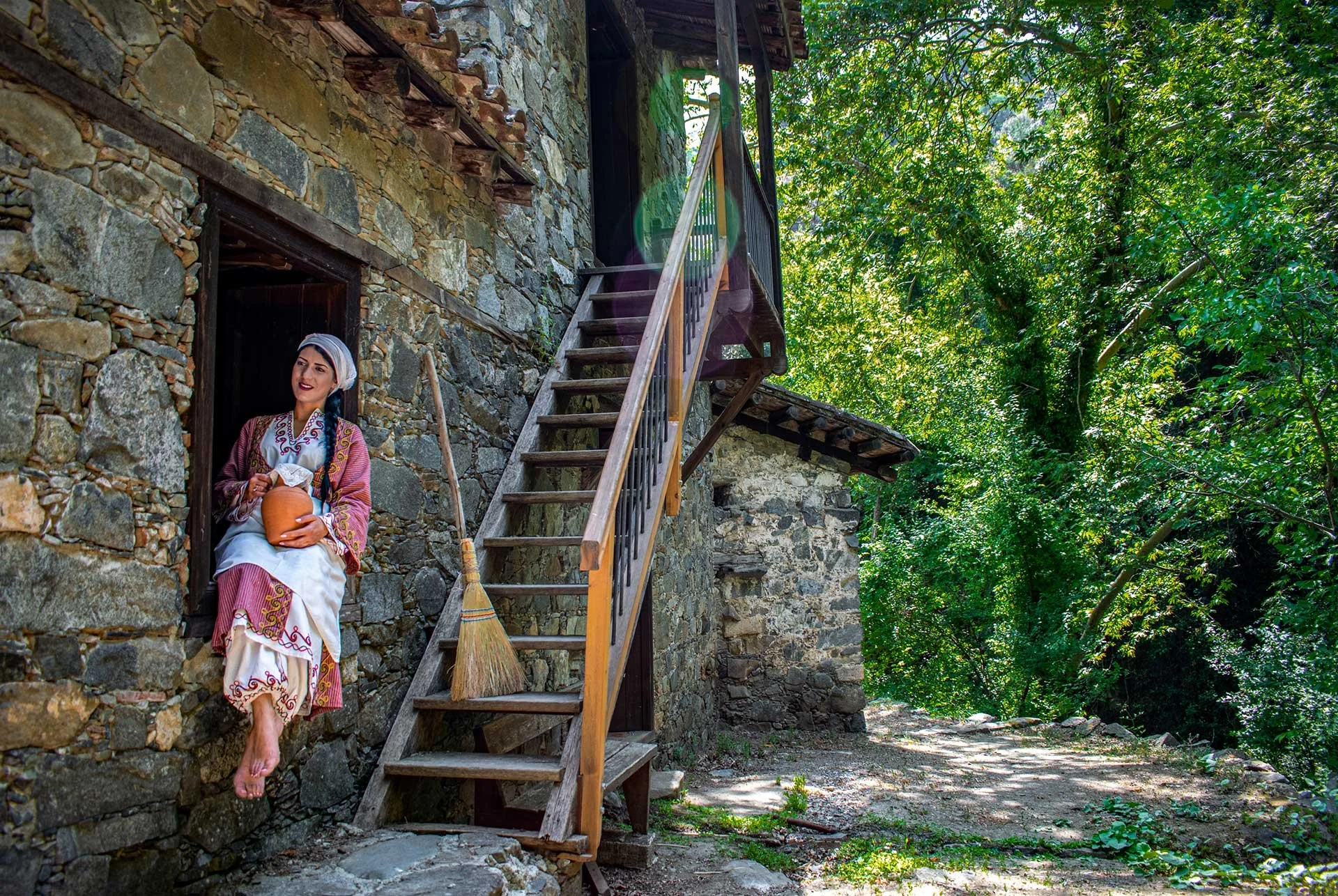
2o βραβείο / Στον νερόμυλο του Κύκκου, Καλοπαναγιώτης
ΧΡΙΣΤΙΝΑ Χ”ΠΑΥΛΟΥ