Mountain Agriculture, Food Systems and Terraced Landscapes
Mountain agriculture is a distinctive territorial system shaped by elevation, slope, climate, soils, biodiversity, cultural practices and local knowledge. FAO defines mountain agriculture broadly as agricultural activities carried out on high elevations and mountain slopes, including water harvesting and conservation practices. Mountain agricultural production systems include rainfed and irrigated crops, pastoral and agropastoral farming, forestry and agroforestry, freshwater fish capture and aquaculture.
Mountain farming is largely family farming. It is often characterised by small and fragmented plots, predominantly cultivated by smallholder farmers, and by natural constraints such as shallow soils, lower temperatures, erosion, limited mechanisation and difficult accessibility. Its small-scale character, crop diversification, integration of forests and husbandry activities, and low carbon footprint have evolved over centuries in difficult environments. Mountain family farming helps shape landscapes and provides ecosystem services that reach beyond mountain areas, including freshwater provision, disaster risk reduction, biodiversity and agro-biodiversity preservation, recreation and tourism. (FAO, Mountain Farming).
Mountain territories are important centres of agro-biodiversity. They host locally adapted crops and livestock, traditional varieties, pastoral systems, orchards, vineyards, herbs, honey, dairy systems and agro-silvo-pastoral practices. These are genetic resources, cultural practices and territorial assets for food security and climate adaptation.
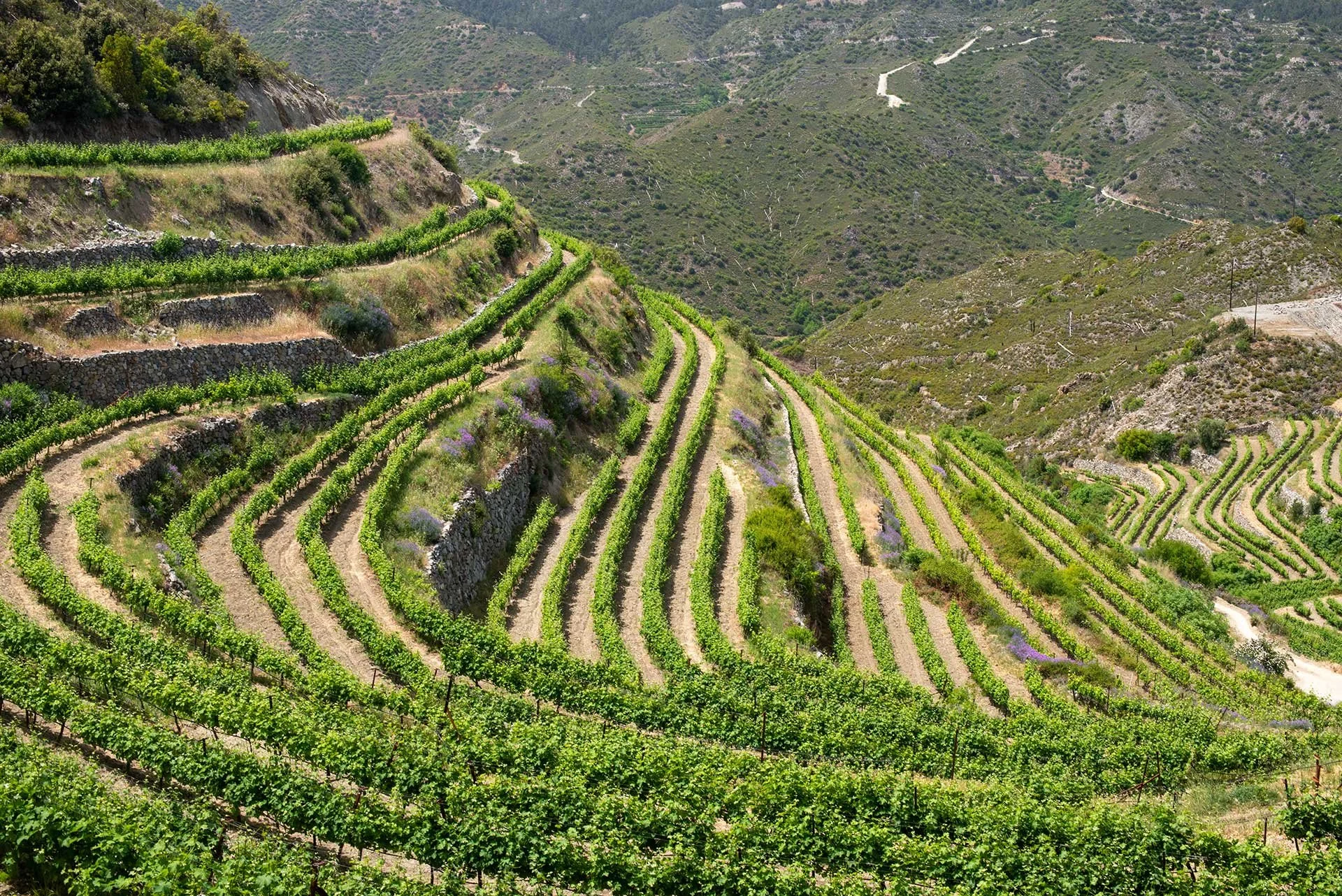
Terraced landscapes are among the clearest expressions of the relationship between people and mountain environments. Terraces, dry-stone walls, irrigation channels, paths, grazing routes and cultivated slopes show how mountain communities have managed soil, water and slope over generations. They are productive infrastructures, cultural landscapes and ecological systems at the same time.
The art of dry-stone construction - recognised by UNESCO on the Representative List of the Intangible Cultural Heritage of Humanity - is the ancient practice of building structures by stacking and interlocking stones without the use of mortar or binding materials. In Mediterranean mountain regions, dry-stone structures are part of the material intelligence of the landscape: they retain soil, manage water, organise cultivation, support pastoral movement and transmit knowledge across generations. (UNESCO Intangible Cultural Heritage, “Art of dry stone construction, knowledge and techniques”).
Mountain agriculture is also linked to products of origin and territorial value. The qualification of origin-labelled products is a collective process anchored in a territory defined by geographical coherence and an identity anchored in history, which translates into reputation. The recognition of the product, its link to the terroir and its typicity can bring producers around common objectives: protection against usurpation, common promotion, improved remuneration and safeguarding of gastronomic heritage. (Dominique Barjolle, “Product qualification and participatory guarantee systems”, in Mountain areas of large Mediterranean islands, 2021).